

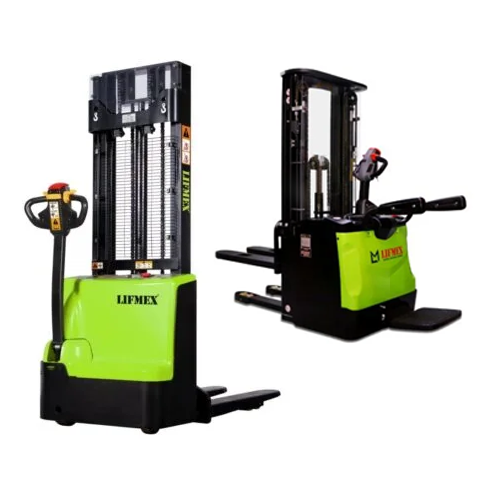
Managing a busy warehouse or storage facility requires the right equipment to move goods safely and smoothly. Every daily task depends on how easily your team can lift, move, and organize heavy pallets across the floor.
Choosing the right lifting equipment helps keep your operations fast, organized, and safe for all workers. At Shabbir Enterprises, we help businesses select the best handling solutions tailored to their exact daily workspace requirements.
When upgrading your warehouse operations, one key question often arises: should you choose an Electric Stacker or a manual stacker? Understanding how each machine works will help you make a smart investment for your team and facility.
Understanding the Manual Stacker
Manual stackers have long been a basic tool for moving goods in smaller warehouses and stockrooms. They rely on human power to pump hydraulic handles and push loads across the storage floor.
While simple in design, they offer clear operational benefits for specific light-duty tasks:
- Human-Powered Operation: Operators use a hand or foot lever to pump hydraulic fluid and raise the forks gradually.
- Compact and Lightweight Design: Easy to guide through narrow doorways, tight corners, and small stockroom aisles.
- Low Maintenance Needs: With no motors or electrical components, maintenance involves basic hydraulic checks and wheel lubrication.
- Always Ready for Duty: Never requires battery charging or electrical power connections before starting work.
Understanding the Powered Electric Stacker
An Electric Stacker is a modern, battery-powered material handling solution designed for faster and higher lifting. It uses an electric motor to raise heavy loads and drive the machine smoothly across the floor.
By taking the physical workload off the operator, an Electric Stacker transforms daily material handling efficiency:
- Motorized Lifting and Travel: Electric power handles both vertical lifting and horizontal travel with simple handle controls.
- Higher Reach Capabilities: Reaches elevated rack tiers easily, allowing facilities to maximize vertical storage space.
- Reduced Physical Strain: Operators maneuver heavy loads with minimal effort, reducing fatigue and workplace injury risks.
- Consistent Shift Productivity: Maintains smooth lifting speed and travel pace from the start of the work shift to the end.
Key Differences Between Electric and Manual Stackers
Physical Effort and Operator Safety
Moving heavy goods manually demands significant physical strength, especially during long work shifts or repeated stacking tasks. Over time, pushing heavy loads can cause worker fatigue and increase the risk of back or shoulder strain.
An Electric Stacker eliminates manual pumping and heavy pushing entirely, creating a much safer work environment. Operators simply press buttons or steer control levers, keeping their energy steady while maintaining high safety standards.
- Manual Stacker Effort: Requires continuous hand pumping and manual pushing, which can slow down progress as workers tire.
- Electric Stacker Relief: Motorized controls perform the heavy work, protecting operators from physical fatigue and strain.
- Load Balance Control: Powered lifting keeps the load smooth and stable while positioning goods at high shelf levels.
Lifting Height and Stacking Performance
Warehouse designs often rely on vertical storage racks to make the best use of available floor space. Manual stackers are best suited for lower stacking levels where simple hydraulic pumping is sufficient.
An Electric Stacker easily elevates heavy goods to multi-tier shelving systems without shaking or operator struggle. This makes it essential for facilities that store items on tall storage racks.
- Lower Shelf Access: Manual models perform well for ground-level moves and low-tier shelf positioning.
- High Rack Capability: An Electric Stacker handles tall rack stacking smoothly, maximizing vertical warehouse volume.
- Speed of Elevation: Powered hydraulic pumps raise loads quickly, saving valuable time during busy receiving shifts.
Work Speed and Daily Warehouse Throughput
In high-volume distribution centers, speed and continuous workflow are essential to daily success. Pushing manual equipment across long warehouse travel routes consumes time and energy.
An Electric Stacker moves quickly across long storage aisles, helping workers handle many more pallets per shift. This speed boost keeps busy loading docks clear and prevents bottlenecks in inventory handling.
- Travel Pace: Motorized drive systems allow rapid movement across wide warehouse floors.
- Turnaround Time: Unloading trucks and stocking racks takes much less time with powered lifting and travel.
- Workflow Consistency: Speed remains steady throughout the day, ensuring deadline goals are met smoothly.
Maintenance and Facility Readiness
Every piece of warehouse equipment requires proper care to deliver long service life and reliable daily performance. Manual stackers feature fewer moving parts, requiring simple hydraulic oil checks and wheel inspections.
An Electric Stacker relies on advanced battery systems, drive motors, and electronic controllers that require routine care. Regular maintenance ensures long battery life, quiet motor performance, and total operational reliability.
- Manual Equipment Care: Focuses mainly on hydraulic seal health and wheel bearing lubrication.
- Electric Equipment Care: Involves routine battery charging, electrical contact checks, and motor diagnostics.
- Long-Term Dependability: Proper upkeep of an Electric Stacker ensures reliable service for many years.
Which Stacker Best Matches Your Warehouse Needs?
Choosing between these two material handling solutions depends on your daily workload, facility size, and storage layout. Matching the right tool to your specific environment ensures maximum efficiency and worker safety.
Choose a Manual Stacker if :
- Your facility handles light stacking tasks only a few times each day.
- Storage aisles and travel distances are short and confined to a single room.
- Loads are light to moderate and do not require high vertical lifting.
- Your workspace lacks dedicated battery charging areas.
Choose an Electric Stacker if :
- Your team moves heavy pallets continuously throughout the work shift.
- Goods must be stacked on high warehouse storage racks regularly.
- Operators travel long distances between receiving docks and storage rows.
- Reducing operator fatigue and improving workplace safety are top priorities.
Partnering with Shabbir Enterprises for Your Handling Equipment
Selecting the right material handling equipment requires guidance from experienced industry specialists who understand real-world warehouse challenges. At Shabbir Enterprises, we bring decades of industry expertise to help you make informed decisions.
We supply a full range of high-performance lifting equipment built to strict safety and durability standards. Our team evaluates your facility layout, load requirements, and daily workflow to recommend the ideal solution.
- Proven Industry Expertise: Extensive experience supplying reliable material handling solutions across diverse industries.
- Comprehensive Product Range: Complete selection of manual stackers, powered electric stackers, and custom lifting gear.
- Certified Quality Standards: Every machine undergoes thorough quality and safety checks before delivery.
- Ongoing Support and Care: Full service support, maintenance assistance, and expert advice for long-term satisfaction.
Final Decision and Next Steps
Both manual and electric stackers serve important roles in modern warehouse and industrial material handling. The best choice depends on your daily storage volume, shelf heights, and how often goods are moved.
Investing in an Electric Stacker boosts daily productivity, protects worker health, and optimizes vertical storage space. For lighter, occasional tasks, a manual stacker remains a simple and practical choice.
Let the expert team at Shabbir Enterprises guide your decision and supply the ideal equipment for your business. Visit our website today at Shabbir Enterprises to explore our complete lifting equipment catalog and contact our specialists.
